Welcome to the Mathematical World!
Tycho Brahe (1546 – 1601)
Master of Observational Astronomy and Precision Measurement
Tycho Brahe was the preeminent observational astronomer of his time, recording the positions of stars and planets with unprecedented accuracy before the invention of the telescope. His meticulous data provided the foundation for Kepler’s laws of planetary motion, demonstrating that precise observation is essential for scientific theory.
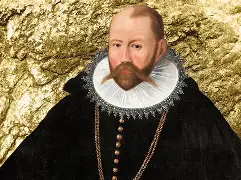
Brahe combined mathematics with careful observation, showing that theory without measurement was incomplete. Using large, sophisticated instruments such as the mural quadrant and armillary spheres, he measured celestial positions to an accuracy of a few arcminutes. His data allowed later astronomers to detect subtle deviations from circular orbits, ultimately leading to the discovery of elliptical orbits.
He constructed Uraniborg, a state-of-the-art observatory on the island of Hven, where he trained assistants in rigorous observational and mathematical methods. Although he adhered to a hybrid geocentric-heliocentric model, his commitment to precision and systematic recording ensured his work remained invaluable for future astronomers.
Brahe’s work exemplified the power of data-driven science, bridging the gap between medieval astronomy and modern astrophysics. By combining careful measurement with mathematical reasoning, he demonstrated that observational rigor is fundamental to uncovering the laws of nature.
Facts:
- Born in Denmark.
- Built the Uraniborg observatory with advanced astronomical instruments.
- Collected celestial data with unmatched precision for his era.
- Lost part of his nose in a duel and wore a prosthetic made of brass or silver.
- His precise measurements enabled Kepler’s discoveries of elliptical planetary orbits.

All rights reserved by the Mathematical Unity
Contact: +8801400044645
Email: mathematicalhorse1453@gmail.com
Our Discord Server: Mathematical Unity [Ulus Riyadiyat]